Plumbing Checks After Flooding
Floodwater can damage plumbing in ways you can't see. Before relying on the system again, go through these checks, and get help with anything you're unsure about.
Request a plumberThe water heater
If floodwater reached the burner, controls or electrical parts, leave it off and have it inspected. Replacement is often safer than repair.
Drains and toilets
Run a sink and flush a toilet, watching other drains. If water rises in a tub or floor drain, the sewer line or septic system isn't coping. Stop using water and get it checked.
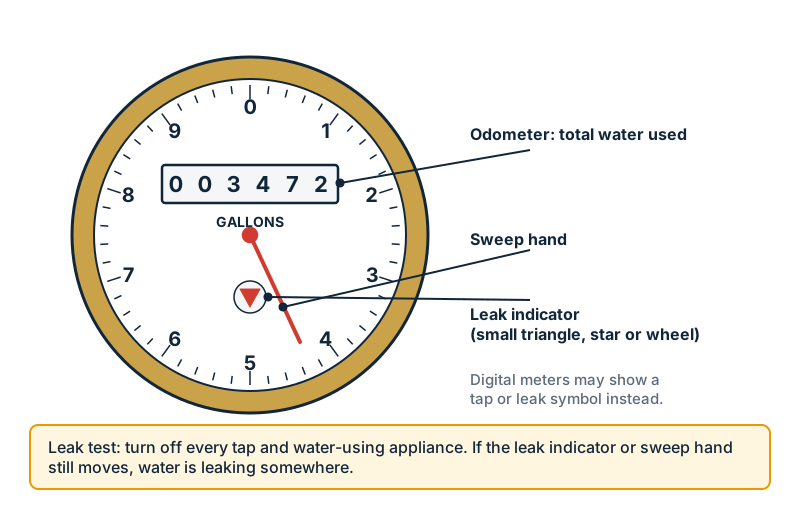
Hidden supply leaks
With every tap off, watch the meter's leak indicator. If it moves, a line may have cracked.
Septic systems
A drain field that was under water may not drain until it recovers. Limit water use and have the system assessed if drains back up.
Private wells
Don't drink well water that may have been contaminated by floodwater until it's been tested. The county health department can advise.
Get help
Note what you've found and see flood recovery plumbing.
Under sinks and cabinets
Floodwater can loosen connections and soak cabinets. Check supply lines and drain traps, and leave cabinet doors open to dry.
Write it down
Make a short list of what works, what doesn't and how high the water reached. It helps the plumber and any insurance claim.
Outdoor lines
Walk the route of the water and sewer lines in the yard. New wet spots, sinking ground or water bubbling up near the meter box can mean a line was cracked by debris or shifting soil. Note the spot for the plumber.
More plumbing guides
Request a plumber
Repairs, renovations and new projects. Tell us what you need and we'll pass it straight to a plumber, who will call you to go over the job and give you a quote.
- Plumbing repairs, renovations and new projects
- Asheville and nearby mountain towns
- Get a quote before any work starts
Plumbing problem in Asheville?
Send a request and a plumber will get in touch. Requests answered 7 days a week.
Prefer email? [email protected]